 Translate
Our performance at a glance
Online Housing Waste Recycling Centre booking system well received by residents
£0.761 Place Based Investment Funding allocated for 2025 to 2026
'Money Smart', our welfare rights and debt advice centre launched
£17.4m funding secured from UK Government for Levelling Up for Ayrshire
Text based mental health service SHOUT launched. Text SUPPORT NA to 85258
Gold SCQF School Ambassador Award achieved by St Matthews Academy
We started construction on our new state-of-the-art Ardrossan Community Campus
25 Community Projects supported through the £2.67m Shared Prosperity Fund Programme
96% of school leavers are going on to higher or further education, training, voluntary work or employment
Equal Programme, our supported employment service, relocated to Lochshore
Participatory Budgeting Programme opened in August 2025 with £204,157 community funding available
280 pupils were recognised for their hard work and dedication at this year's Duke of Edinburgh’s Awards
Welcome
Welcome to our Mid-Year Progress Report on our Council Plan 2023 to 2028. This report covers the period 1 April 2025 to 30 September 2025. Our Council Plan is our contract with our residents and this report details how we are progressing our four priorities of Wellbeing, Communities and Local Democracy, Climate Change, and A Sustainable Council:
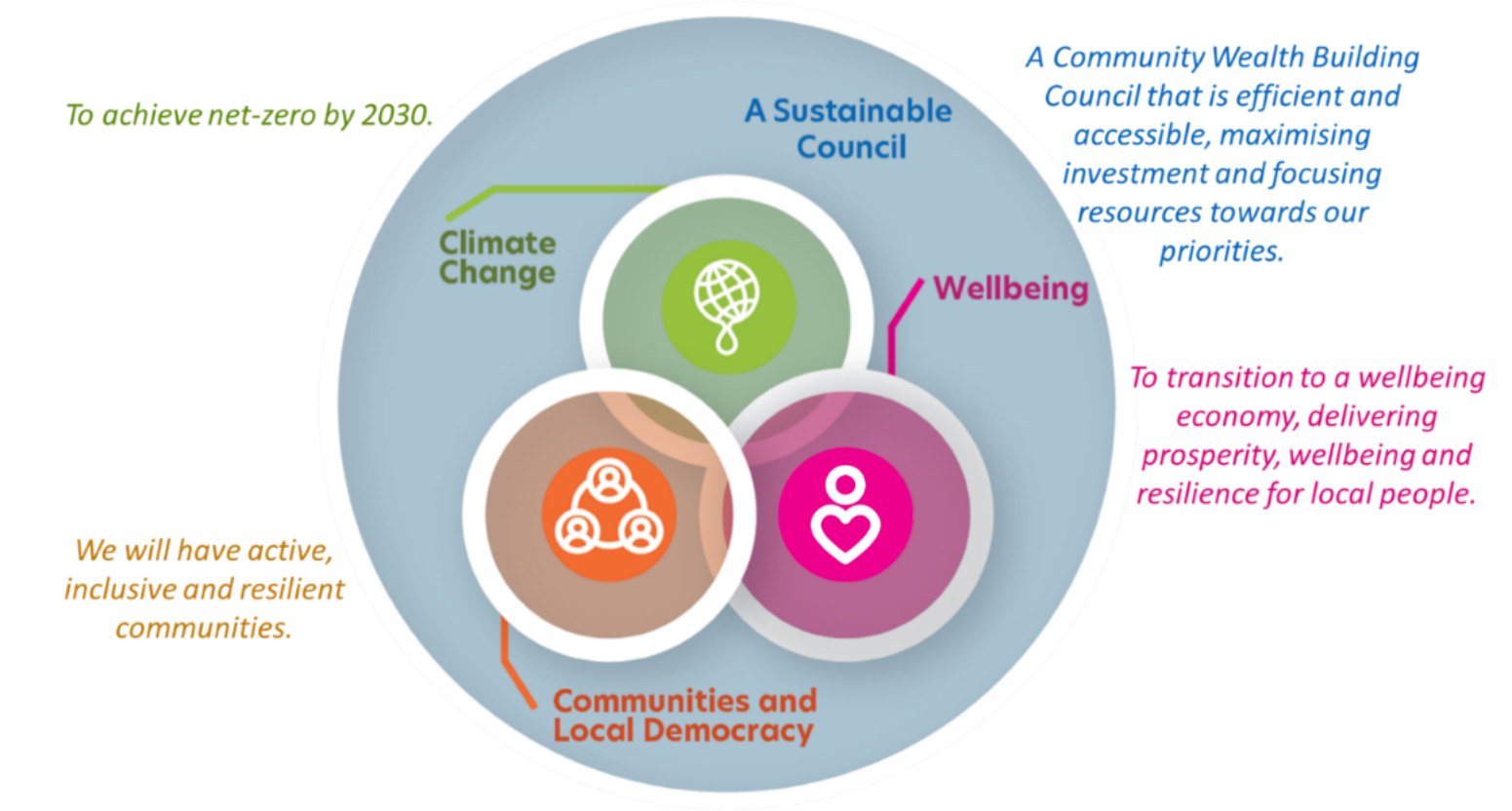
Our Vision: A North Ayrshire that is fair for all
Our Mission: Working together to improve the lives of our people in North Ayrshire
Delivery of our Council Plan is progressing positively; 58% of indicators where the status is known are either on target or slightly adrift of target and 100% of our actions are on target. We regularly compare our performance to other local authorities with similar demographic traits through the Local Government Benchmarking Framework (LGBF) and include information on this within the attached LGBF Report. There are 33 LGBF indicators that link closely with our Council Plan priorities. Of these, 15 have been updated since our Year-End report and 11 are in the top two quartiles.
The latest publication of ‘Achievement of Curriculum for Excellence Levels (ACEL)’ has highlighted the positive impact raising attainment work has had. Amongst other highlights, achievement for S3 pupils has increased for Third and Fourth Level in both Literacy and Numeracy since 2021 to 2022. The poverty-related attainment gap has reduced by 10 percentage points in Third Level Literacy and nine percentage points for Third Level Numeracy in S3 pupils.
Cabinet approved the recommendations of our Locality Planning review. These are being implemented and include supporting the partnerships, improving the content of meetings, a renewed focus on the locality plans and Community Investment Fund guidance.
We launched Money Smart, linking to our new Financial Inclusion Strategy 2025 to 2030 and closely aligned to the Council Plan Wellbeing priority and the Health and Social Care Partnership’s strategic ambitions of enabling communities, developing and supporting our workforce, providing early and effective support, improving health and wellbeing, and tackling inequalities. The strategy provides a holistic overview of the financial services available to enable our residents to take positive, independent steps financially.
Our new booking system for Household Waste Recycling centres is now available, meaning our Recycling Centre teams can assist residents with waste disposal more efficiently and safely. Currently 53% of household waste is recycled making the council the 9th highest performing in Scotland (based on the 2024 calendar year data).
Though our Supporting our 2030 Woodland: A Tree Planting Strategy, 50,255 trees have been planted creating new or extending existing woodland areas across North Ayrshire and we are progressing well to reach our overall target of 108,000.
To give context to the environment in which we deliver our services, some key measures are highlighted below. These are monitored as part of a wide range of measures within our Wellbeing Economy Dashboard, which examines trends in North Ayrshire.
Population of North Ayrshire: 134,010 (June 2024)
24.3% of our children live in poverty after housing costs (2023-2024)
28% of our households live in fuel poverty (2021-2022)
63.1% of working age population is in employment (January - December 2024)
12.2% of people earn less than the living wage (2024)
Area wide CO2 emissions are 540.1kt CO2e (July 2025)
Together we will ensure a North Ayrshire that is fair for all.
Wellbeing
To transition to a wellbeing economy, delivering prosperity, wellbeing and resilience for local people.
Key activities
A key focus of our Child Poverty Strategy Team (CPST) is developing and delivering place-based tests of change in partnership with communities and third sector partner organisations.
Place-based tests of change are methods of working with communities in specific areas to understand and address key issues such as child poverty. Due to the complexities involved, place-based tests of change tend to be long term approaches to help establish solutions within and alongside our communities.
We are working with our communities to ensure that support is accessible and informed by lived experience.
As part of the tests of change, two new roles will be introduced in areas of highest need, identified through data mapping and partner organisations. These roles will act as connectors, helping individuals navigate and access existing services, while building confidence and capability.
To support this work, the CPST has secured access to the Smart Data Foundry, which uses data to drive positive social change. For example, in the Fairer Futures Partnership co-design initiative with Beith Community Development Trust in Kilbirnie South and Longbar, the data has helped shape a collaborative response that will include financial inclusion support through the local credit union and welfare rights officers. It will also include community-led efforts to strengthen numeracy and literacy outcomes.
In response to staff feedback, the CPST developed and launched an e-learning module for colleagues to support professional learning around poverty. The module covers perceptions and impact, relevant legislation, language and terminology. The module has since been made available to external partners following multiple requests from colleagues in the third sector and NHS.
Additionally, the CPST is working with Ayrshire College and the Third Sector Interface (TSI) to design a short, accredited entrepreneurial course for parents. On completion, participants will be eligible to apply for a small business start-up grant. Both initiatives are supported by the Child Poverty Early Intervention Fund (CPEIF).
We continue to develop the Collaboration for Health Equity (CHES) programme alongside national partners (Public Health Scotland and the Institute for Health Equity). Our local steering group reviewed data produced at North Ayrshire, Locality and Intermediate Zones. As a result an ‘enhanced focus’ within the programme have been agreed:
- Marmot Principle 1: Give every child the best start in life: Irvine - Fullerton, Castle Park South, Bourtreehill
- Marmot Principle 3: Create fair employment and good work for all: Three Towns - Ardrossan Central, Saltcoats Central, Stevenston Hayocks
- Marmot Principle 6: Strengthen the role of ill health prevention - Garnock Valley
The Achievement of Curriculum for Excellence Levels (ACEL) data was presented to Cabinet on 3 June 2025 and showed that:
- The overall achievement level of S3 learners has increased for third and fourth levels in both literacy (five percentage points) and numeracy (seven percentage points) since 2021 to 2022.
- For fourth level literacy and numeracy, the achievement figures are the highest since 2019 – up by 12 percentage points and two percentage points, respectively.
- For S3 pupils, the poverty-related attainment gap has reduced by 10 percentage points in third level Literacy and by nine percentage points for Third Level Numeracy.
- At 60%, the percentage of S5 leavers achieving fifth level numeracy is the highest in the last five years.
- 96% of school leavers are progressing to higher education, further education, training, voluntary work or employment.
This shows work being achieved around raising attainment, specifically in literacy and numeracy and closing the attainment gap between our most and least disadvantaged children and young people, is having a positive impact. As part of the release there has also been a modest narrowing of the attainment gap related to care experienced learners.
With support from the Corporate Parenting Team, five secondary establishments completed the Keeping the Promise Award (KTPA). This award empowers those working within an educational setting to learn what they can do, both individually and collectively to Keep the Promise by raising awareness and supporting practice. Education teams attended The Promise Champions Network on 18 September 2025 and were updated on the new Progressions data base which will track care experienced learners as they move on to college. Each secondary school now has an active Champions Board with 68 young people regularly taking part in activities. This session will see more involvement for our primary aged care experienced learners.
Within the Service Improvement Plan, we have identified actions to strengthen partnerships with Health and Social Care Partnership (HSCP) colleagues to include those who work with our care experienced learners. Education and HSCP colleagues meet monthly to facilitate joint planning for care experienced learners in external education and care placements.
Our joint delivery of the Performing Engineering Operations (PEO) Units Scottish Credit and Qualifications Framework (SCQF) Level 5 have commenced. They are delivered in Ardrossan Academy and Ayrshire College enabling our young people from a number of our secondary schools to engage in the programme.
Cabinet endorsed the further development of the Ayrshire Growth Deal (AGD) tool within North Ayrshire educational establishments. The tool is a way of learning more about the AGD in terms of the careers and opportunities available to our young people within these sectors and skills required. The following sectors of employment are focused on as key growth areas:
- Aerospace and space
- Tourism
- Communities and energy
- The environment
- The circular economy
Designed for our young people, feedback from our schools in June 2025 suggests finalisation of the tool along with the inclusion of some further information and media contact would be beneficial. Our Education Service has already shared the tool with a wide range of colleagues and partners for feedback.
Catchment Areas
In June, Cabinet approved, where possible, the reservation of up to two places at each year stage throughout the primary schools of Fairlie, Mayfield and Montgomerie Park. Due to the number of new build homes being constructed in the catchment areas for these schools, it was prudent to get ahead of the demand for places and to ensure children moving into these areas would have a place within their catchment primary school. Additional benefits will include reducing potential transport and staffing costs of children being educated at a school out with their catchment area.
Our Early Years Centre in Largs was awarded a Silver Rights Respecting School Award by UNICEF UK in April 2025. The Largs UNCRC coordinator said:
Quote: As one of the UNCRC leads, it is a joy to see children not only receiving their rights but harnessing these for themselves which can be seen through children assessing risk in their own environment. It also supports children in advocating the rights of others by utilising our Makaton communication signs (a communication program that uses a combination of speech, hand signs, and picture symbols to help people with learning and communication difficulties) which support our children in becoming ambassadors towards their own learning.
Quote from: Largs UNCRC Coordinator
This builds on the prior position of 16 primary schools and one secondary school being awarded the UNICEF UK Gold Rights Respecting School Award (RRSA) in recognition of having fully embedded children’s rights throughout their policies, practice and ethos.
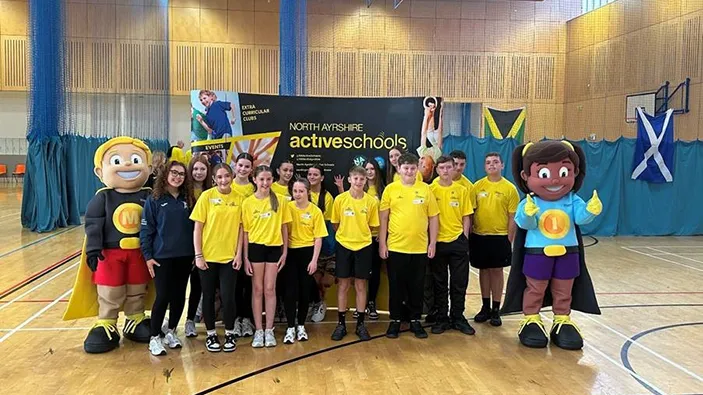
North Ayrshire Active Schools, part of our council’s Community Learning and Development Service, held a Young Ambassador’s Conference at the Portal in Irvine in September, welcoming 175 secondary school pupils. Arran High School, Ardrossan, St Matthew’s, Auchenharvie, Kilwinning, Irvine Royal, Largs, Garnock and Greenwood academies were all in attendance. The event provided an opportunity for our young people to discuss and shape sport opportunities within their educational establishments, and also develop communication, leadership and influencing skills. Just one of several programmes run within North Ayrshire Schools, the Active Schools programme provides our young people with an inclusive platform to promote and encourage participation in sport across our educational establishments and the wider community.
Our welfare rights and debt advice service for North Ayrshire residents launched as: ‘Money Smart’ on Thursday 1 May. North Ayrshire Health and Social Care Partnership’s Money Smart service incorporates the former Money Matters and Welfare Reform Advice teams, and will provide free, confidential and impartial welfare rights advice for all North Ayrshire Council housing tenants and non-council tenants, including homeowners, housing association tenants, those living in private lets, and anyone without a fixed address, who:
- Is engaged with and referred by North Ayrshire Health and Social Care Partnership, NHS Ayrshire and Arran or council services or third sector agencies such as foodbanks, Citrus or Women’s Aid
- Has dependent children or is pregnant
- Has a disability
- Is a carer
- Is from a minority ethnic background
Our new Financial Inclusion Strategy for 2025 to 2030 was approved by the Integrated Joint Board in September. The strategy is closely aligned to the Health and Social Care Partnership’s strategic ambitions of:
- Enabling communities
- Developing and supporting our workforce
- Providing early and effective support
- Improving health and wellbeing
- Tackling inequalities
This strategy will allow individuals to access appropriate financial services or products to manage their money effectively, sustain their homes, build savings for unplanned expenditures, be financially resilient and be more confident in making informed life choices.
The Equal Programme has relocated from the Trinity Church, Irvine to Lochshore Hub in the Garnock Valley. This initiative is part of the Your Next Move, Working North Ayrshire Programme and aims to provide person centred training and employment support for individuals with long-term health conditions, helping them take the next step toward sustainable work. The relocation offers more space and improved facilities to provide enhanced support for people with disabilities and long-term health conditions as well as providing a Specialist Employability Support hub in the Garnock Valley. It was opened by the Social Justice Secretary on 3 September 2025.
Our third annual Employability Week ran from 26 to 30 May and featured a series of community events to help showcase services that are available through the council and various partners. Information about job vacancies, new careers, training and volunteering were made available. It included:
- A Modern Apprentice recruitment session where young people were able to talk to council services recruiting for apprenticeships, discover more about the roles and get support to apply.
- CEIS Ayrshire’s first birthday celebration at the Youth Hub in Stevenston Library. This offered an opportunity to find out about CEIS employment support programmes for those aged 16 to 24 years.
- A family celebration day with games at the We Work For Families (WWFF) Parent Hub in the Frank Sweeney Centre for Enterprise in Ardrossan. Attendees explored the variety of support the WWFF Team offer to parents.
- A Department for Work and Pensions (DWP) jobs fair in Saltcoats Town Hall. This was an opportunity to meet local employers, discuss job vacancies and seek support from employment services.
- A barbecue and open day at Eglinton Community Gardens, Eglinton Park, Kilwinning, hosted by the Employability Team. This gave an opportunity to learn more about the council’s supported employment service.
The Modern Apprentice event resulted in more than 280 young people applying for positions while at the DWP Jobs Fair almost 40 people filled in applications or arranged interviews.
A Business Breakfast was held by Your Next Move, Working North Ayrshire programme at the Riverside Lodge on Tuesday 30 September. The event was free to attend and a chance to discuss local recruitment, training and retention provided by our council and partner agencies. The event was attended by over 30 local businesses, which led to follow up visits to employers who were looking for support to upskill existing employees and seeking to recruit new staff.
As part of Suicide Prevention Week in September, our Education Service and Health and Social Care Partnership teamed up with Shout, and launched a text-based Mental Health Service for North Ayrshire residents. The free and confidential service is available to residents of all ages and can be accessed by texting SUPPORTNA to 85258 where you will be connected to a trained Shout Volunteer. Overseen by a clinical supervisor, Shout volunteers are able to provide short term text-based assistance and also signpost residents to further support services where required.
Our council continues its ambitious plans to build over 1,600 new homes across North Ayrshire.
Recent Council home developments include:
- 29 new homes built on the site of the former Stanecastle School in Irvine (17 general needs homes, as well as eight homes suitable for wheelchair living and four amenity bungalows).
- 19 new homes on the site of the former James McFarlane School on Dalry Road, Ardrossan.
- 14 new homes created across four sites at Laburnum Avenue, Beith, and Newhouse Drive, Kilbirnie.
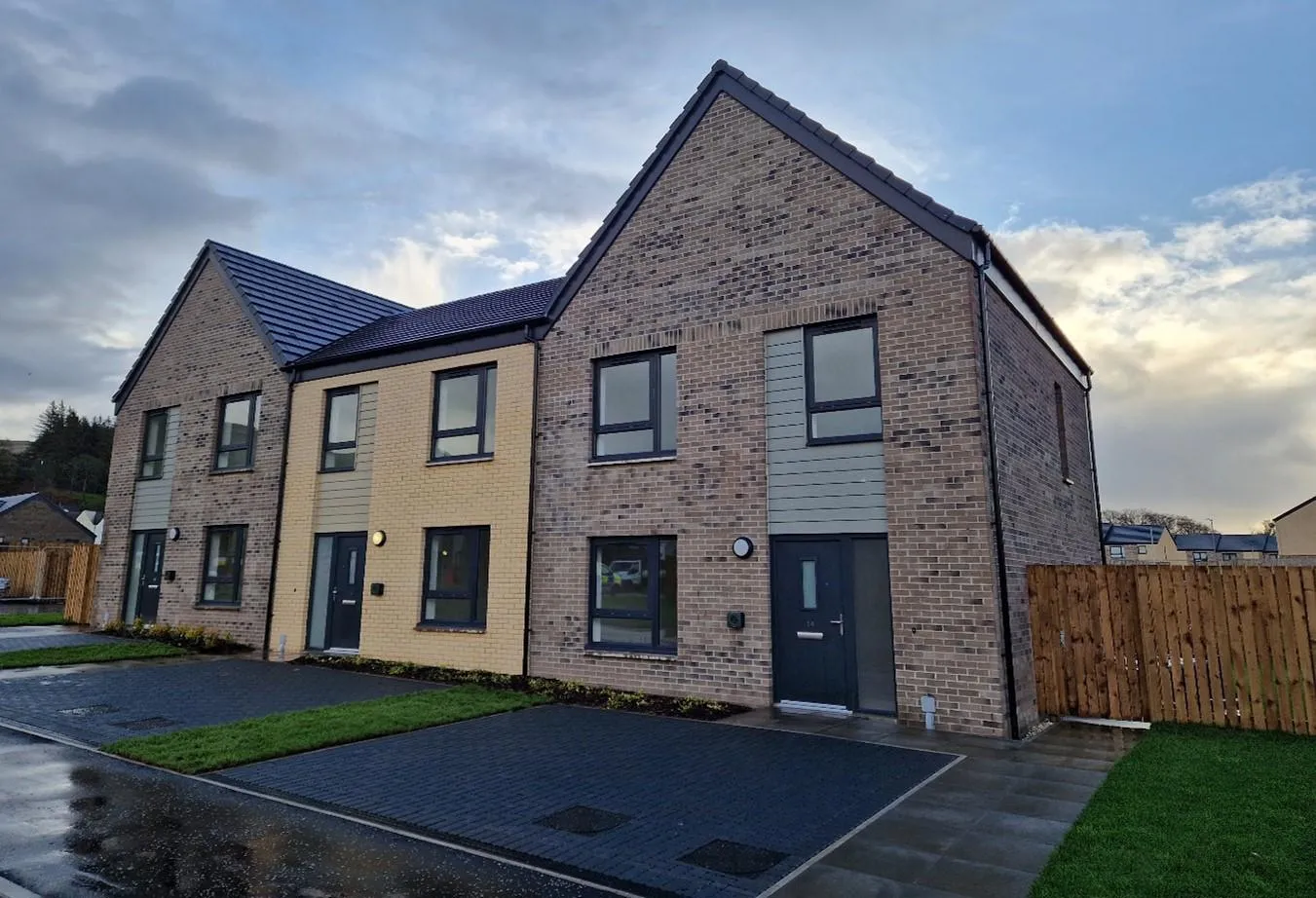
Twenty-six new council homes were officially opened on Thursday 18 September at the former St Mary’s Primary School site in Largs. A mixture of two and three bedroom modern and energy-efficient affordable homes were constructed at the site. The £6m project was supported by a grant of £4m from the Scottish Government and completes the regeneration of former school sites in Largs.
Our Arran Housing Taskforce conducted a survey seeking opinions on the current housing provision on the island as well as future aspirations. More than 600 responses were received including more than 450 submitted by island residents. The survey results will be analysed and a report produced in the near future.
At Cabinet in September, the addition of three new actions within the Local Housing Strategy (LHS) 2023 to 2028 were approved. The first of the new actions will continue to steer and enhance the focus of the LHS towards meeting community needs whilst also balancing affordability and sustainability. The second action will cement our collaborative approach to working with the Scottish Government towards ending the national housing emergency. Our council is actively working towards negating pressures to prevent the declaration of a housing emergency in North Ayrshire in the future. And finally, the third action will embed the Housing (Scotland) Bill 2024 within all council policies and procedures.
Our North Ayrshire Housing Allocations Policy 2025 to 2030 was approved at Cabinet in September. Developed in accordance with the Housing (Scotland) Act 1987 and aligning with the Scottish Government’s Scottish Housing Allocations Practice Guide 2019, the policy which will be implemented from November 2025 sets out how social housing across North Ayrshire will be allocated. Amongst other objectives, the policy aims to maximise the use of the North Ayrshire Housing Register (NAHR) when addressing local housing needs, prioritise applicants assessed as having the greatest need for accommodation and continue to ensure that housing is allocated by fair and transparent means.
Extensive funding proposals were approved by Cabinet as part of the annual Regeneration Delivery Plan. This included £0.761m under the Place Based Investment Programme, £1.561m under the Vacant and Derelict Land Fund and £0.962 under the Active Travel Infrastructure Fund Tier 1.
The plan focuses on the delivery of physical regeneration across North Ayrshire through an ambitious project-based rolling programme. It informs our priorities for securing and delivering against external funding sources including Scottish and UK Government funds. Further details and specific projects can be found in the ‘A Sustainable Council’ section.
Construction of the ‘state-of-the-art’ new Ardrossan Community Campus document began in July. The campus will feature shared community facilities – including a library, learning hub, and indoor sports facilities featuring a swimming pool, sports hall, gymnasium, dance studio and fitness studio. It will also have outdoor sports facilities including two sports pitches and a multi-use games area, an outdoor learning landscape, recreational and growing spaces, along with associated parking and infrastructure.
Island residents and stakeholders were actively involved in the new National Islands Plan for Scotland, participating in two virtual engagement sessions, facilitated by the Scottish Islands Federation. These sessions provided an opportunity to review the outcomes of the public consultation previously undertaken to inform the review of the first National Islands Plan and to understand how these findings are shaping the new Plan. Participants were also able to learn about the proposed priorities and themes for the updated Plan and contribute their views to help shape its content. Progress updates will be shared at the North Coast and Cumbraes and Arran Locality Partnership meetings.
Our North Ayrshire Visitor Management Plan for 2025 was approved by Cabinet in May. The annual plan outlines our approach to overseeing the impact that tourism has across North Ayrshire. It addresses the challenges and opportunities that tourism brings, setting out priorities for the year ahead as well as taking into account issues identified in the previous plan. Priorities for 2025 include:
- Ensuring our Strategic Tourism Infrastructure Development Plans underpin and support applications for tourism-related projects
- Quarterly meetings of the Tourism Forum to support visitor economy activity, and
- Enhancing the promotion of events taking place across North Ayrshire in 2025.
Next steps
We will achieve the following by 31st March 2026 (unless other timescales are detailed below).
- We will establish formal engagement with Smart Data Foundry and complete an initial feasibility assessment for integrating internal datasets with the platform. This will include identifying priority datasets, integration pathways and producing a succinct summary of the potential benefits for evidence-informed decision-making.
- By June 2026, we will have co-designed and launched a short, accredited entrepreneurial course in partnership with Ayrshire College and our Third Sector Interface (TSI), enrolling at least 10 parents in the first cohort. We will utilise funding from our Child Poverty Early Intervention Fund to enable graduates access to small business start-up grants.
- By December 2026, we will co-design and implement a place-based initiative with third sector partners in at least two communities, including recruitment of connector roles to help families access services and build resilience and self-efficacy in navigating available financial and wellbeing supports. As part of the co-design process, we will develop an impact assessment framework and identify opportunities for wider application and scaling up to best serve our communities.
- We will host a CHES workshop for a range of partners and stakeholders to understand key priorities and opportunities to improve health outcomes in the area, while also working with national partners to support the second publication by the Institute of Health Equity (IHE).
- We will further develop the Equal Programme Lochshore Park Hub.
- We will finalise plans to collaborate with the community and voluntary sector to provide a whole system and person-centred approach to early intervention and child poverty.
- We will co-create with senior leaders a Raising Attainment and Achievement strategy, which will include effective use of tracking and monitoring as well as attainment discussions and improved data literacy skills across all staff groups.
- We will continue capacity building in the leadership skills of middle and senior educational establishment staff.
- We will further increase direct links within the curriculum to the Ayrshire Growth Deal and design further opportunities for skills development in a range of contexts.
- We will support the delivery of the Promise Education Award with a pilot group of schools.
- We will support care experienced learners through joint planning, improved guidance and the development of a new Service Operating Procedure which will detail how to deliver the Education Service consistently and efficiently.
- Following analysis of the results of the North Ayrshire Community Transport Survey, we will work with partners and communities to design and implement a pilot Community Transport project by the end of 2026 to 2027.
- We will develop a new Housing Acquisition Strategy, consolidating existing acquisition programmes and funding streams, and investigating new opportunities, to ensure any homes purchased from the second-hand market, and off-the-shelf from developers, deliver maximum impact in addressing current and projected social housing needs and demands across North Ayrshire. (Expected target date 30 of June 2026)
- We will review the Council’s Scheme of Assistance, including consideration of the evidence base for any further interventions, such as the potential for a means-tested support fund for common repairs in council factored housing blocks.
Case Study - Drama for Wellbeing
In August, our Youth Work Team worked with the Drama for Wellbeing recruits on a five-day summer programme themed around the climate emergency. It focussed on wellbeing and resilience, culminating in a showcase performance at the Harbour Arts Centre, Irvine.
During one of the hottest weeks of the summer, a total of 38 children and young people aged between five and 13 years old remained committed, energised and upbeat. Some were stepping out onto the stage for the very first time, yet showed great confidence as they educated and inspired their audience to take the urgent environmental actions needed now to build a better, greener and more optimistic future.
At the drama workshops, supported by our sessional youth workers and Youth Work Modern Apprentices, everyone had the unique opportunity to learn alongside our dedicated mental health and wellbeing youth worker and a talented drama professional to discover their own talents and express their bravery.
The performance focused on key environmental themes of deforestation, plastic pollution, the marine crisis and the concerns of the children and young people themselves, who provided everyday solutions as to how we can take responsibility and work together now to tackle climate change for future generations.
Other highlights included marine-themed arts and crafts using recycled materials – these eco creations then formed the backdrop for this year’s North Ayrshire Youth Work Marymass float.
Communities and Local Democracy
We will have active, inclusive and resilient communities.
Key activities
Our 2025 to 2026 Participatory Budgeting Programme opened in August 2025, inviting applications for Locality, Community Wealth Building and Youth Participatory Budgeting grants. By the closing date on 22 September, we received 263 applications from groups across North Ayrshire. Grants ranging from £1,000 to £2,000 will be awarded to local community and voluntary organisations. A total fund of £204,159 will be shared among successful applicants. Members of the community will take the lead in deciding where the funding is allocated, casting their votes for the projects that matter most to them and shaping positive change in their communities.
At Cabinet in May, the implementation of proposals stemming from the locality planning review across our six localities were approved. We undertook self-assessment work and explored best practice for the future of locality planning, particularly the involvement of communities in local democracy across North Ayrshire. Following a large consultation involving surveys with all locality representatives, Elected Members, community planning partners and locality partnerships, the following recommendations were determined and themed around key areas:
Support for the Partnership
- Support for the partnership will be developed using the concept of the “Team Around the Partnership”.
- We will review the membership of Locality Networks which meet regularly to deliver on actions related to the priorities and look at how we can drive participation and representation through existing channels.
- A key action will be to continue to strengthen and develop the role of Locality Networks with the support of the council and HSCP Strategic Leads.
- A place-based approach to locality planning is key, and a clear understanding amongst stakeholders of the assets within our localities (people, buildings, skills, capacity, funding etc) will be key to improving outcomes.
- The role of Local Place Plans and engagement as part of the new Local Development Plan and through our Tenant and Resident Associations will be an important aspect of locality discussions in the coming months.
Format and content of partnerships meetings
- A formal decision-making section at the start of each meeting, followed by interactive discussions around an agreed locality priority.
- The co-production of agenda items and the role of the community representative who is Vice Chair will be emphasised.
- Alternative formats for reporting will reduce the time spent on “show and tell” style feedback at the meetings which survey respondents indicated could be more effectively communicated.
- We will further develop the Community Voice agenda item which is already implemented in Garnock Valley across all partnerships.
Focus on the locality plan and addressing inequalities
- We will refocus the locality plan to emphasise its centrality to all work related to Locality Partnerships.
- Actions to address priorities will be developed further with partners and community representatives.
- Plans will clearly articulate the golden thread which runs upwards and downwards from locality plans to the LOIP and the Council Plan.
- We will also clearly articulate links to Community Wealth Building in communities.
- In parallel to the implementation of Locality Planning 2.0, officers will work with partners across the council, Third Sector Interface (TSI) and KA Leisure to understand how we can better attract, support, recognise and retain volunteers locally and improve the overall volunteer experience.
Community Investment Fund (CIF) processes
- We will update the CIF guidance which is provided to applicants and strengthen the checklist which Locality Officers’ complete and supply to assist with decision making. This will help to ensure that applications which reach our Partnerships are as robust and aligned to local priorities as possible.
- As CIF funding is expended and the approach reaches its natural conclusion across the various localities, we will work with communities and partners to ensure a smooth transition to new ways of co-production.
The following Community Investment Fund (CIF) projects were approved following applications from Locality Partnerships:
- Radio City Association (£65,000), Garnock Valley Partnership: Supporting the employment of a Community Development Manager and a Project Manager, initiating stage one of their Knox Institute Project, advancing wind and hydro energy projects.
- Clyde Coast and Cumbraes Men’s Shed (£47,500), The North Coast and Cumbraes Partnership: To carry out various improvements and alterations to the centre providing a more user-friendly venue.
- Three Towns Growers (£49,240), The Three Towns Partnership: Supporting the building of a Community and Education Hub which will host events including farmers’ markets and those promoting good mental health and wellbeing.
The approval of a Community Investment Fund (CIF) application by Largs Thistle Football Club was granted in September. Funding of £63,000 was sought to purchase a new minibus which would be used by all educational establishments at the Largs Community Campus and Largs Thistle Youth teams. Costly private hire coupled with teachers having to use their own cars as well as children missing educational opportunities due to a lack of transport has led to the application and its subsequent approval.
The Ayrshire Rural and Islands Ambition Fund empowers local communities to address their unique challenges. Following a successful application, IT equipment awarded during 2024 to 2025 included: 156 laptops; 132 iPads; 79 printers; and 79 keyboards
In line with legislation, at a Special Meeting of North Ayrshire Council in May, Council agreed to proceed with a formal review of the Scheme of Establishment which details the creation and governance of community councils. An initial consultation was held between June and August with formal consultation responses received from three community councils and six individuals. These were shared at a Special Meeting of Council in September and included suggestions to review the boundaries of Irvine and Dreghorn community councils, requests for further engagement and opinions on whether Community Council elections should be paused or proceed during the review.
To allow for a further period of direct engagement prior the next formal period of consultation, it was agreed by Council that the formal engagement process should be paused to enable Community Council elections in the autumn. These elections are being supported by our council’s Election Team.
Two hundred and eighty pupils were recognised for their hard work and dedication across the Bronze, Silver and Gold Awards at this year's Duke of Edinburgh’s Awards held at St Matthew’s Academy. We currently have nine secondary schools and six youth and community groups involved with the Duke of Edinburgh’s Award.

April saw our 31st Joint Youth Cabinet meeting where almost 100 young people met with our key decision makers at Saltcoats Town Hall. This was the latest in a series of joint meetings involving our own Cabinet, senior education managers alongside members of the Scottish Youth Parliament and Youth Council Executive. The discussions centred around key themes that had been decided upon by young people prior to the event including:
- Equalities in Health, where pupils identified their top three health priorities.
- Community Wealth Building, where attendees shared their views on how to try to create a sustainable and inclusive local economy.
- The United Nations Convention on the Right of the Child (UNCRC) and the legislation protecting and upholding young people’s rights.
- Positive Relationships, and how to maintain them with friends, schools and beyond.
- Cyber Resilience, including the pathways to a digital career, how to tackle online challenges and become more cyber-aware.
Approval was granted at Cabinet in May for the establishment of a Firework Control Zone (FCZ) Stakeholder Group to administer the Firework Control Zone Applications Policy. The policy was established to handle FCZ applications in North Ayrshire with the aim of negating the dangers fireworks can pose to communities whilst still allowing controlled celebrations to take place. The policy provides communities with a clear process to establish FCZs in North Ayrshire. The FCZ Stakeholder Group will comprise of representatives from Scottish Fire and Rescue Service, Police Scotland and various council officers.
In September, we launched our Social Media Training for local Community Groups through the Irvine Locality Partnership. With five members in attendance, the session focused on looking at various social media platforms to build on digital skills and learn how to utilise them effectively to promote their community group. Following the success, a further session is planned to take place in Irvine and consideration is being given to delivering these wider across all locality areas.
Whilst working with our island communities, our Islands lead attended Locality Partnership meetings to ensure alignment with the Local Island Plans and the Locality Planning Partnership 2.0 review. Our island stakeholders were encouraged to participate in a range of consultation events in the development of the new National Islands Plan for Scotland to ensure the needs and voices of our island communities were heard. North Ayrshire was also represented at the inaugural Islands Economy Showcase at the Scottish Parliament in April. This event brought together island businesses, community leaders and policymakers. It aimed to highlight the economic potential of Scotland's islands and address their unique challenges.
Next steps
We will achieve the following by 31st March 2026 (unless other timescales are detailed below).
- We will review the membership of Locality Networks.
- We will continue to strengthen and develop the role of Locality Networks.
- We will develop a clear understanding amongst stakeholders of the assets within our localities (people, buildings, skills, capacity, funding etc).
- We will progress the findings from the Locality Planning Review 2.0.
- We will refocus the locality plan to emphasise its centrality to all work related to Locality Partnerships.
- Actions to address priorities will be developed further with partners and community representatives.
- We will review community grants and funding processes, aiming to implement changes by the end of 2026.
- We will clearly articulate links to Community Wealth Building in communities.
- We will continue work with partners across the council, TSI and KA Leisure to understand how we can better attract, support, recognise and retain volunteers locally and improve the overall volunteer experience.
- We will update the CIF guidance which is provided to applicants and strengthen the checklist which assists Locality Officers with decision making.
- As CIF funding is expended and the approach reaches its natural conclusion across the various localities, we will work with communities and partners to ensure a smooth transition to new ways of co-production.
- We will continue to monitor pupil numbers at Fairlie, Mayfield and Montgomerie Park primary schools to ensure the reservation of two places at each year stage remains effective.
Case Study - Adult Learning: 'The Discovery Award'
The Discovery Award is a nationally recognised programme for people aged over 50 years designed to promote a healthy and active lifestyle. It works by encouraging participants to take on personal challenges through a series of activities with different levels to achieve (bronze, silver and gold status). The programme encourages lifelong learning and active participation, providing opportunities for adults often excluded from community learning opportunities to develop new skills, strengthen local connections through shared experiences and reduce social isolation.
The group, often described as the ‘Duke of Edinburgh’s Award for over 50s’ comprised of 12 members and was launched to support individuals in the community wishing to reconnect, learn, and engage with others. Working towards bronze level through weekly group sessions and monthly trips to places of interest that have been researched and planned by the group. Participants are encouraged to take ownership of their personal learning journey by documenting their journey, providing a sense of progress and achievement while also benefitting from the support of the group.
The group format allows participants to work at their own pace, while peer support fosters a sense of community and has helped several members to form friendships beyond the group whilst increasing confidence in participating in new activities. The group has created a supportive and inclusive environment where every individual feels valued, providing opportunities for individuals who may have felt isolated to reconnect with community life. Skills development and personal growth are central to the program and support learners to achieve accredited awards.
One member shared their experience, following the sudden loss of both parents they found themself feeling isolated, withdrawing from friends and family, and struggling to cope day to day and expressed hope that becoming part of the group might help them “find a bit of myself again.” The participant engaged openly and with determination from the beginning and quickly noticed a shift in mindset where every thought was no longer a negative one. Having the group to look forward to each week provided focus, purpose, and something positive to build on, describing the group as a safe space where they felt supported, included, and the shared learning journey helped them feel less alone whilst also improving their mental health with a greater sense of hope and purpose.
This participant’s story highlights how community-based adult learning is not only about skills development, but also about healing, resilience, and connection. By combining the Discovery Award with wraparound support, the group has become a catalyst for meaningful change in their life.
Climate Change
To achieve net-zero by 2030.
Key activities
In line with our 2030 Woodland: A Tree Planting Strategy, 50,255 trees have been planted through various projects and by community partners. The total number of trees planted is on schedule to achieve the overall target of 108,000 trees planted by 2030. Further tree planting opportunities are being progressed in the following areas:
- 7,000 trees in the Annick Valley Park, which is scheduled during the 2025 to 2026 tree planting season.
- Quotes are currently being obtained for the planting of approximately 4,000 trees at Nethermains Solar Farm.
- A plan to plant approximately 23,000 trees at Montgomerie Park, Irvine is currently being assessed.
- The Almswall Park area of Kilwinning is being assessed for suitability for planting between 2,000 and 3,000 trees.
Our Streetscene Strategy Team, in partnership with Nature Scotland and our Biodiversity Officer, continue to work to implement areas of naturalised open space to create habitats for wildlife and encourage bees and insects through diverse seeding in our wild meadows. This includes allowing tree debris to be left on site (where safe to do so), to help promote natural habits. Through funding from regeneration by way of NatureScot, our Streetscene service has purchased specialist machinery with the specific purpose of managing areas for biodiversity and nature regeneration. Plans for new wildflower meadows collectively covering over two hectares are being developed for the Irvine and Garnock areas.
We officially opened our Ardrossan Coastal Path in August 2025. The path is part of a wider network of regeneration plans and active travel improvement to make travelling around Ardrossan and the surrounding areas easier. The path route alongside the new community campus being constructed.
Throughout August, our Energy and Sustainability Team attended community events across all six localities offering free packs of plants to residents to encourage bees, butterflies and other pollinators within North Ayrshire. One thousand pollinator packs were given away equating to 7,000 plants and 2,000 seed packets – all part of our council’s ongoing work through the North Ayrshire Nature Network (NANN) aimed at responding to the nature emergency and climate change locally.
We have developed a comprehensive Recovery and Sustainability support offer for our business base. This will continue to be our main method of business engagement and will continue as part of Recovery and Sustainability funding. Projects that businesses have started to deliver on are showing tangible results with some notable impacts:
- 1,568 Tc2e carbon reduction
- £547k energy cost savings
- 88 new jobs projected (27 already realised)
- 35 staff members trained
- £190k external funding realised
Following Cabinet approval of the Regeneration Delivery Plan proposals, the following projects will be progressed as resources permit:
Active Travel (AT) Route Construction and Improvements
- Fairlie Bowling Club Route Re-alignment.
- Brodick to Glen Rosa AT Route.
- AT Route improvements in Beith and Kilbirnie.
- AT Route improvements in Largs.
- Local Authority Direct Award works.
- Blacklands Recreation Ground Active Travel Improvements.
- Bannoch Road from Irvine Road to Corsehill, Kilwinning AT Improvements.
- Auchenharvie Road to Canal Street (Plantation) Pedestrian Improvements.
Active Travel Facilities
- EBike infrastructure on Arran and Cumbrae.
- Pedestrian Accessibility Audit on Arran.
Future Years Feasibility Studies and Design Development including preparing projects for Tier 2 funding applications
- Cumbrae Active Travel Route.
- Sharphill to National Cycle Network (NCN) Saltcoats.
- Drybridge to i3 AT Route.
- Girdle Toll to Irvine AT Route.
Transportation Projects
Real Time Passenger Information Signs (RTPI).
Levelling-Up Fund (LUF) Active Travel Improvements
- Long Drive, Irvine.
- Riverside Way, Irvine.
- Strategic Investment Route (River Irvine Path), Irvine.
- Heatherhouse Road, Irvine.
Regarding promotional work, officers are undertaking the following activities:
- Improving knowledge about sustainable transport choices by continuing to promote the knowledge of sustainable transport choices in North Ayrshire through the Travel Smart Programme and Trinity Active Travel Hub; working with workplaces, organisations and volunteers to provide active travel activities across the area.
- Through the Net Zero Accelerator Programme, helping North Ayrshire businesses work alongside each other to measure, manage and reduce emissions.
- Helping people develop more positive attitudes towards sustainable transport choices by continuing with workplace engagement including creation of travel plans and bike maintenance classes.
- Updating and promoting the council’s Trinity social media pages where people can gather information on Active Travel choices.
- Carrying out a Beat the Streets behaviour change programme in Irvine.
Our new booking system for Waste Recycling Centres is now in place. The new system aims to make visits smoother and quicker, allowing customers to book slots at recycling sites at a time convenient to them. Furthermore, the change should enable staff to assist customers to dispose of their household waste safely and correctly, minimising contamination and improving recycling.
Our council continues to perform well with a recycling rate of 53%, making the council the 9th highest performing in Scotland, based on the 2024 calendar year data. The average recycling rate in Scotland for 2024 was 44.3% and North Ayrshire Council is therefore 8.7 percentage points above the national average.
At the start of the academic year, schools are provided with a range of curricular opportunities to support and enhance pupil entitlement to Learning for Sustainability. This includes access to on request and bespoke professional learning, signposting to professional opportunities with national partners such as West of Scotland Development Education Centre and Keep Scotland Beautiful (KSB) and promotion of SCQF accredited short courses such as Biodiversity Action and Climate Emergency Training available through KSB.
Work between our Education and Sustainability services has resulted in the creation of a series of lessons for first and second level learners focusing on climate impacts.
Actions and adaptations in North Ayrshire were created for Climate Action week as well as a hands-on Climate Chemistry Workshop attended by over 190 pupil participants. These resources will be reviewed to keep them current and increase uptake in 2026. A similar set of lessons will be created for Biodiversity week in May.
Community groups and young people across North Ayrshire are actively embracing low-carbon initiatives and climate-based volunteering, leading practical projects that reduce environmental impact and raise local awareness. Some examples are captured below:
- In Kilwinning the ‘Choose Kilwinning’ group has successfully secured UK Shared Prosperity Funding to convert the town’s Christmas lights to solar power. In a further move towards sustainability, they are replacing annual real trees with large, reusable trees crafted by the Kilwinning Community Shed.
- In Irvine, the Fullarton community group has registered with Business Energy Scotland, making them eligible for a potential cashback grant of 75% (up to £20,000) for energy efficiency measures and the installation of renewable heat technologies like heat pumps and solar thermal.
- Further tailored camps, including ‘Outdoors for Wellbeing’ for 31 primary children and ‘Gardening for Wellbeing’ for 15 primary and secondary pupils, have successfully connected young people with nature and environmental volunteering.
We offer environment volunteering and education across North Ayrshire. In the Garnock Valley, groups like the Friends of Lochshore Park and Youth Synergy, who are linking with The Conservation Volunteers, are empowering residents to take ownership of their local green spaces.
Kilbirnie and Glengarnock Community Council is sourcing local volunteers to maintain the town’s planters.
In Irvine, a dynamic partnership between Greenwood Academy, University of the West of Scotland and other partners is underway to renovate two skiff boats. This project provides young people with practical skills while educating them on marine pollution and climate change through activities like testing local water quality.
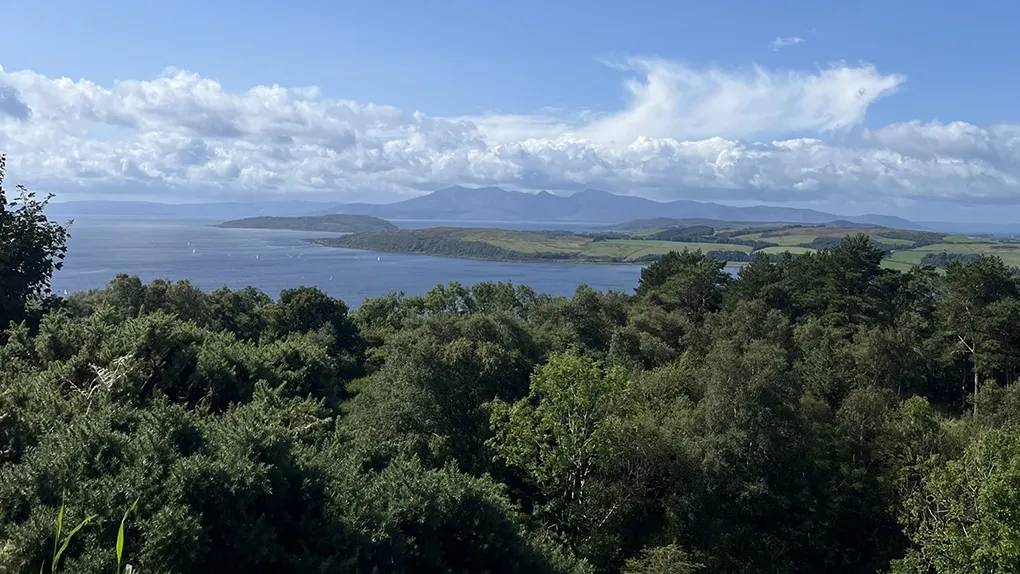
Currently, there are 56 EV Charging Points owned by our council, and 57 privately-owned EV charging points across North Ayrshire. We also continue to work with our partners at South and East Ayrshire Councils to procure a concession contract for the delivery of 307 new EV charging points across the whole of Ayrshire. It is anticipated that the contract will commence in March 2026.
Next steps
We will achieve the following by 31st March 2026 (unless other timescales are detailed below).
- We aim to plant an additional 13,000 trees during the financial year 2025 to 2026.
- We will progress a programme of Active Travel and sustainable transport projects.
- Building on the success of Climate Action Week and the Climate Chemistry Workshop, we will create new climate change education resources for Biodiversity Week in May 2026.
- We will aim to increase pupil engagement, improving on 2025, and in conjunction with national partners, develop new learning sessions.
- We will continue to support and empower community groups and our young people through community-led low-carbon initiatives across North Ayrshire.
- Our Business Development Team will offer additional workshops alongside the Net Zero Accelerator Programme to help businesses cut carbon and adopt circular economy practices.
Case Study - Robin Dam
Located on the River Garnock to the north of Kilbirnie, Robin Dam forms a flood storage reservoir constructed as part of our Upper Garnock Valley Flood Protection Scheme. The reservoir stores water during periods of heavy rainfall resulting in decreased peak river flows further downstream. The Robin Dam, together with the construction or improvement of other flood defences has increased flood protection in Kilbirnie, Glengarnock and Dalry.
Flooding in the area has been recorded since the 19th century and onwards. One particular flood event in 2008 resulted in considerable damage to property. The highest recorded water level in the River Garnock was at Kilbirnie town centre on 4th August 2020.
The Scottish Environment Protection Agency’s (SEPA) first flood risk management plan for Ayrshire (2015) indicated that approximately 810 residential properties and 100 non-residential properties were at risk of flooding from both rivers and surface water sources. The development and implementation of the Upper Garnock Flood Protection Scheme was included as a measure in the 2015 Plan and the accompanying Local Flood Risk Management Plan (2016), as a flood scheme would help to reduce flood risk and flood impacts to people and property from the River Garnock, the Powgree Burn and the Rye Water. However, the scheme would not remove the risks and impacts completely.
Construction commenced in March 2020 and completed in 2023. The initial value of the awarded contract was £12.6 million. 80% of the project costs qualified for Scottish Government grant funding with the remaining 20% to be funded by North Ayrshire Council. Following an online public poll, the Dam was named ‘The Robin’ due to connections with a former pool in the River Garnock where local people visited to swim, fish and walk.
The Flood Protection Scheme has reduced the risk of flooding from the River Garnock in Kilbirnie and Glengarnock, has provided more robust protection from flooding from the Powgree Burn to properties on Burnside Street, Glengarnock and has reduced the risk of flooding from the River Garnock and Rye Water in the Mill Park housing estate in Dalry.
The Upper Garnock Valley Scheme and the Robin Dam reservoir are an example of how the Council is preparing and adapting to climate change. The risks of flooding to people, property and infrastructure were identified in the first and second Flood Risk Management Plans and adaptation actions were developed and implemented to reduce the impacts of flooding and included the construction of a flood storage reservoir, flood embankments and flood walls. These actions ensure that communities are prepared for and have an increased resilience to flooding and climate change.
Information story boards including before and after images will be placed on the public walking path around Robin Dam explaining why the Dam was built and how this benefits and protects the local area. It is hoped this will encourage visitors. The story of the Flood Protection Scheme will be included in Council’s Sustainability Team primary school lessons as an example of adapting to climate change and also within internal training materials.
A Sustainable Council
A Community Wealth Building Council that is efficient and accessible, maximising investment and focusing resources towards our priorities.
Key activities
Place Based Investment Programme
The 2025 to 2026 allocation has been confirmed as £0.761m. This includes:
- £0.250m - Dockhead Street, Saltcoats - Public realm improvements including full replacement of the blocked paving, replacement drainage full length, upgraded lighting installation and new street furniture. This includes providing new lighting provision to enable easier installation of Christmas lights.
- £0.250m - Community Project Fund Grant scheme to support community led place-based project development and implementation across North Ayrshire. This provides 50% match funding to the UK Shared Prosperity Fund allocation, recognising over subscription to previous schemes.
- £0.170m - Repurposing Property Grant Fund. To continue the implementation of the Repurposing Property Grant Fund which supports landowners and community groups to bring vacant land and properties into positive use by funding feasibility studies, investigation work, detailed designs, statutory approvals and delivery.
- £0.050m - Public Space Camera – A re-deployable camera to support public safety and project delivery.
- £0.041m - Beith Kirk - Supporting sustainable repairs to the historic grade C listed building to preserve the asset and ensure it is available for future generations.
Vacant and Derelict Land Fund
The Scottish Government has advised that North Ayrshire Council’s Vacant and Derelict Land (VDL) Fund allocation for 2025 to 2026 is £1,562,056. This includes:
- £0.432m - Levelling Up for Ayrshire: Commercial and Low Carbon Infrastructure. Funding to contribute to the North Ayrshire Commercial and Low Carbon Infrastructure Levelling-Up Fund (LUF) project. This project aims to address market failure in the delivery of new energy efficient commercial property alongside the provision of associated low carbon and active travel infrastructure at Kyle Road, Annickbank and i3 sites.
- £0.650m - Lochshore Garden, Activity Hub and Associated Works. To support works to conclude Phase 1 of the Lochshore Masterplan, including detailed design and delivery of access, green space, infrastructure, facilities and environmental improvements.
- £0.250m - Repurposing Property Grant Fund. To continue the implementation of the Repurposing Property Grant Fund as detailed above.
- £0.150m - Ardrossan North Shore Residential Masterplan. A masterplan to re-establish the residential development capacity, market interest and associated value of land adjacent to the Ardrossan Campus.
- £0.079m - Maintenance Works to VDL Sites. Maintenance works associated with sites that are unlikely to be developed in the short and medium term.
Scottish Government approval of the delivery plans is pending to enable project delivery.
Shared Prosperity Fund
The £2.67m programme will run in line with the previously approved investment plan, albeit under the new priorities of the UK Government.
A round of competitive community grant funding has concluded with 25 projects supported. Grant awards are currently being processed. Additional funding through the Place Based Investment Programme boosted the funding pot to mitigate the reduction in funding this year.
Council-led projects are also progressing, with support for the public space cameras, Lochshore Hub, Dockhead Street public realm improvements, Seagate Castle and Kilwinning public realm improvements.
Local Business and People and Skills Themes continue to be delivered in line with forecasts.
Irvine Plan for Neighbourhoods
We are working with the Irvine Neighbourhood Board to develop the required Regeneration Plan for submission to the UK Government in Autumn 2025.
Smart Infrastructure Pilot Project (SIPP)
A SIPP Stakeholder workshop is in development with Scottish Maritime Museum to showcase the SMART Places potential of poles, Wi-Fi and Internet of Things (IoT).
Digital Infrastructure and Connectivity Plan
The Digital Infrastructure and Connectivity Plan (DICP) stakeholder engagement workshops are complete. Outcomes from the workshops will be shared with stakeholders for scoring in late 2025 and a roadmap and recommendations developed thereafter. This work continues to guide future digital infrastructure investment decisions.
A short-term working group has been established to co-ordinate delivery, align requirements and support future-ready digital infrastructure. The framework will underpin a smart place approach, enabling consistent, scalable solutions for future technologies and connectivity needs.
5G Innovation Region (5GIR) – Driving Regional Impact
The Ayrshire 5GIR continues to make strong progress in driving regional innovation and digital adoption. The programme was directly invited by the UK Government’s Department of Science, Innovation and Technology (DSIT) to submit a second extension bid.
The Ayrshire Digital Economy Ecosystem group (ADEE) completed their tours of the three innovation hubs.
Our Digital Renewal Manager attended and spoke at the Connected Britain event, raising Ayrshire’s profile on a national stage and winning the Industrial Innovation award. With 8,000 attendees over two days, this is a significant achievement for the A5GIR.
In April several representatives of local businesses took part in a unique three-day training course which aimed to help upskill engineers in the region to fill the current skills gap. The course was launched at the National Manufacturing Institute Scotland (NMIS) Digital Process Manufacturing Centre, located at Booth Welsh in the i3 area of Irvine, and was funded by the Ayrshire Skills Investment Fund (ASIF). ASIF is a £3.5m Ayrshire Growth Deal project.
As part of the Great Harbourside Programme to regenerate our harbour as a fantastic place to live, work and visit, we consulted with our residents in September on the Maritime Mile, (phase two of the project). The ambition of the Maritime Mile is to improve the design and presentation of Harbour Street and Montgomery Street, upgrading connections between Irvine railway station and the Beach Park. A Maritime Heritage Hub, Marine Arts Hub, and Coastal Hub will also be created providing new spaces for communities and visitors to enjoy the Harbourside.
A new accessibility tool was introduced on our website to provide users with options for accessing and customising information. The tool includes features such as font size adjustment, a dyslexia-friendly font, high contrast mode, and translation into multiple languages. During September, workshops were held in libraries throughout North Ayrshire to inform residents about these features. The Accessibility tool support video explains how to access council services more easily.
We have commenced preparations for our budget engagement for 2026 to 2027. The medium-term financial outlook, which details the proposed savings, will be presented to Council on 5 November 2025. Pending approval, this will initiate our budget engagement from 6 November to mid-December.
Our Transformation Programme
Our current Transformation Programme was approved in 2023 and developed alongside our Council Plan 2023-2028 so fully aligns with our priorities. We drive change and transformation, using technology and innovation to deliver efficient services for the benefit our residents and address the financial challenges faced by our council. The Transformation programme helps support our embedded culture of continuous improvement.
Audit Scotland completed a Best Value Thematic Audit on how councils are redesigning and delivering more efficient services to achieve planned outcomes, the findings of the audit were presented to our Audit and Scrutiny Committee in May 2025.
Our Transformation programme is progressing at scale and pace. This section provides an update on our main Transformation themes and areas of service review.
Our Digital Working Group continues to make progress on key digital projects agreed as part of the national transformation project teams for Housing, Waste and Fleet Management. This includes strategic activity across our council and nationally through the Scottish Government, Improvement Service (IS), SOLACE and Digital Office. To date the following progress has been made:
- Parents Portal: A national online portal has been created to enable parents to communicate digitally on a range of services with schools. Since its launch in the Largs cluster, 78% of parents and carers completed their annual data check online, removing the need for paper forms. Further rollout with secondary schools is expected to begin in November 2025, with primary schools to follow.
- Artificial Intelligence (AI): The introduction of our AI Policy provides staff with guidance on appropriate use of a version of CoPilot AI being used across the council. We are preparing to trial the licenced version of CoPilot for additional functionality. Testing of Magic Notes is underway within the HSCP.
- National Digital Strategy refresh: A refresh of the National Digital Strategy has been approved by the Scottish Government, COSLA and SOLACE and will be launched at the FutureScot event in Edinburgh in November 2025.
- Purchase to Pay Review: A comprehensive review of the purchase to pay process including ordering, receipting and invoicing is currently underway. The discovery phase of the project has been completed, with resources temporarily redirected to support the upgrade of the Financial Management System. The upgrade remains on schedule for implementation by mid November 2025 and the purchase to pay review service review is due to commence in January 2026.
- Digital economy: To shape North Ayrshire’s digital future, collaborative working across our services has continued. Through the Digital Infrastructure and Connectivity Plan, work to identify priorities for potential future investment are in progress and the new Digital Connectivity Procurement Framework is being developed to support smarter, scalable solutions that meet evolving connectivity needs. We’re also exploring innovative co-funding models to maximise impact and ensure long-term value for our communities.
- East Ayrshire Digital Access Network (EA DAN): The East Ayrshire Digital Access Network is made up of representatives from local and national organisations working together to close the digital and data divide. Our Library Service will participate in the network to explore opportunities to support digital exclusion priorities.
- Blue Badge Applications: We will promote the review of the Blue Badge application process with a view to producing a more streamlined ‘Once for Scotland’ digital system.
The Irvine Locality Property Review continues to be progressed as part of the Land and Property workstream. The main purpose of the review is to align our operational property estate to complement modern ways of working, leading to a carefully managed rationalisation of our property estate and to support Community Wealth Building through greater community use of council owned property. This programme aligns closely to our strategic priorities. The focus of the first phase of the property review has been Irvine which has our most significant concentration of property assets, taking a whole locality approach.
Phase 1 works completed include:
- Trinity Church lease signed by KA Leisure in June 2025.
- Relocation of our Employability Team to Lochshore Hub.
- Work commenced on the new Training Suite at Cunninghame House with expected completion in December 2025. Customer Service Centre works will follow immediately after the training suite is handed over.
- Work commenced on construction changes at Quarry Road with expected completion in February 2026.
Phase 2 of the works is also now underway with a review of the remaining localities and land being undertaken:
- Sessions have been held with service areas within the remaining localities to identify potential property proposals.
- Service areas have been consulted regarding land requirements and mapping of land areas has commenced.
Energisation of the new 7.48MW Nethermains Solar Farm is now complete and the site will see an additional 4,000 trees planted supporting our council’s Tree Planting and Nature Network strategies. Construction works are also complete on the Shewalton Solar PV Farm with energisation expected to follow in December 2025.
The new solar farms will make a major contribution to renewable energy generation and carbon reduction, as well as bringing sterile land back into productive use.
The programme of works for the next six months includes:
- Energisation of Shewalton Solar PV Farm.
- Upgrading of track roads around Shewalton site.
- Completion of CCTV security at Shewalton site.
- Operational practices for both solar farms.
- Feasibility study for future off taker (parties purchasing the electricity) provision for Nethermains.
The Commercial Property workstream’s vision is of a more efficient property portfolio across three themes. Progress across each workstream includes:
1. Maximise occupancy from the current estate portfolio
With our Property Management and Investment (PMI) Team now leading on commercial estate, a performance review was undertaken with a range of improvement actions being developed to maximise income and support Community Wealth Building.
Recommended actions emerging from the review include:
- Review the repossession process of abandoned units.
- Early engagement in relation to arrears.
- Realign rental levels with market conditions.
- Amending fee charges.
- Undertake physical improvements to units and estates.
- Explore flexible lease durations.
- Repurposing or disposal of units that are not viable as commercial properties.
2. Maximise opportunities from Economic Development, Growth & Regeneration and Ayrshire Growth Deal investment (existing projects)
The following activities have been progressed during this period to maximise the opportunities from investment:
- Annickbank Pavilion Phase 3 – Following completion of the project in March 2024, a tenant took occupation of the building on 1 September 2025.
- Montgomerie Park Sites E to G – Following a successful marketing strategy, a preferred bidder has been identified for all three sites.
- Legal Services have been instructed to conclude missives, following Cabinet approval in June 2025.
- Portland Road Land Sale - Legal Services has been instructed to conclude missives of a partial land sale, following Cabinet approval. Regeneration Services will undertake cross service engagement to identify options for the remaining land.
3. Develop proposals for new investment and securing ROI (future projects)
An award for the Levelling Up for Ayrshire – Commercial and Low Carbon Infrastructure under the Levelling Up Fund (LUF) Round 3 of £17.4m was secured from the UK Government, the memorandum of understanding was received April 2025. Informed by market feedback, the North Ayrshire proposal aims to address market failure in the delivery of new energy efficient commercial properties alongside the provision of associated low carbon infrastructure at key employment areas in Irvine. The Irvine investment concentrates on Kyle Road, Annickbank and i3 sites with the following progress made to date:
- Kyle Rd Phase 2, Irvine: Additional design work is underway to enable a tender to be issued early 2026.
- Annickbank Innovation Campus, Irvine: Following additional design work, it is anticipated that a tender will be issued winter 2025.
Since the introduction of the new online Household Waste Recycling Centre (HWRC) booking system in April, feedback from customers and employees has been positive. Visitors have praised the smoother booking process and improved on site experience with several compliments received through our social media and customer contact channels. Site staff have also welcomed the system, highlighting how it has streamlined operations and waiting times.
An anonymous customer satisfaction survey currently shows an average rating of four out of five, based on early responses. To further enhance the process, a new check-in app has been introduced to help HWRC teams register visitors quickly on arrival. Daily and weekly reports are produced to track booking activity across our sites, together with ongoing monitoring of customer services calls to ensure the system continues to run efficiently.
“I would like to say how easy it was to book a slot with the new booking system for the HWRC it is such a simple process. My husband visited to deposit some wood and was amazed to see there was no queues (never before has he arrived and got in straight away). He arrived for his scheduled time and was back out within 10 minutes. It used to be a thought to visit the site previously, we would keep putting it off due to there always being long queues. He said it was such a straightforward/organised process. Thank you.” – Resident
“I would like to say well done to NAC - Waste team for implementing the new booking system. We have made our first booking which was such an easy process. When we visited the site, we arrived for our allocated time, we were in/out in 10 mins. No tail back of queues. It is now a pleasure to take our rubbish to the HWRC, thank you.” – Resident
“Would just like to say how amazing it was going to Bartonholm today via the booking system. So easy to do, no waiting to enter, straight in to be greeted by two lovely gentleman who directed me to skips. Once moved round I was met by a young guy who was also friendly and helpful. I would just like to thank you for a much more organised system.” – Resident
Phase 2 of the project (October 2025) will see:
- Exploring the potential for electronic payment of existing tip permits for commercial customers on Arran.
- Improving and streamlining the renewal process for tip permits.
- Increased flexibility for customers with the 1-day hire permit process for those with hire vans.
Due to updated Persistent Organic Pollutants Regulations and new guidance issued by the Scottish Environment Protection Agency (SEPA), North Ayrshire Council is required to have Waste Upholstered Domestic Seating (WUDS) collected and managed separately from other bulky waste items. WUDS includes items such as sofas, sofa beds, chairs, stools etc. The new uplift process and online booking form launched on 1 September 2025 on our website, streamlining the booking process for customers. Since its launch, over 250 customers have placed special uplift orders successfully using the new form. The next phase will introduce mobile devices for waste collection crews to support automated integration with our CRM system and quicker updates on special uplift orders for customers and advisers.
Our Workforce Strategy 2024 - 2028
The Workforce Strategy 2024–2028 aligns with both our Council Plan and the Medium-Term Financial Outlook, outlining how our workforce will contribute to achieving our council’s priorities within the framework of available financial resources.
Audit Scotland completed a Best Value Thematic Audit on workforce innovation and how councils are responding to workforce challenges, the findings of the audit were presented to our Audit and Scrutiny Committee in August 2024.
This section provides a summary of progress across our four main themes within the associated action plan.
Workforce Plans
All services have workforce plans that are reviewed on a six-monthly basis. These reviews ensure workforce plans are live documents, responsive to business demand and include PESTLE analysis, change planning and succession planning. Key initiatives include ‘grow our own talent’ initiatives, leadership development and adapting to statutory changes. These plans support the delivery of our Council Plan priorities.
Development interventions
A variety of development interventions have been progressed to support workforce planning such as a Connected Leadership session aimed at Senior Managers which focused on the workforce strategy and action plan and tools available to embed and assist with effective workforce planning. Within the Communities and Housing Directorate, opportunities have progressed for additional qualifications in Housing as part of the Leadership Academy (employee training) approach, recruitment of Modern Apprentices and in-work vocational training for Building Standards.
Integration with Transformation
Workforce planning is incorporated into transformation programmes to consider workforce benefits, resource and impact.
Workforce Information Toolkit
This digital toolkit has been developed for Managers to provide easy access to live workforce information which supports effective planning and management. This is currently being rolled out across our council.
Performance Dashboard
The Workforce Strategy has a series of performance indicators to ensure effective performance management of the strategy. These indicators have been surfaced on a Workforce Strategy Performance Dashboard offering a user-friendly overview to support workforce planning.
Digital Skills Survey
We recently conducted a Digital Skills Survey to assess digital confidence and skills. Results show strong digital proficiency but highlighted areas for improvement in document collaboration and troubleshooting. An action plan has been implemented to address these areas through targeted training, workshops and peer support.
Agile Workstyle Wellbeing Survey
Employees deemed to have an agile workstyle were surveyed on wellbeing and productivity, with positive findings on recruitment and retention, engagement and collaboration, work-life balance and uptake of wellbeing initiatives. An action plan is in place to address improvement areas.
Apprenticeships and ‘Grow Your Own’ Programmes
67 Modern Apprentices and 11 Graduate Apprentices are currently completing qualifications whilst working in various teams across our council. With links to schools, colleges and universities, these programmes support our talent pipeline.
A range of wellbeing activities are available to support the health and wellbeing of our workforce. This is hosted under the banner of our Livewell Programme that promotes activities such as mindfulness, meditation and health checks as well as canoeing, paddleboarding etc.
Access to occupational health support is available for all employees. This provides a variety of services including physiotherapy, counselling, Cognitive Behavioural Therapy (CBT), bereavement and trauma support.
Health and Safety Initiatives
The Health and Safety Team continues to monitor and report all RIDDOR instances across our council and advisors work with Services to ensure each case is adequately assessed and appropriate action is taken. Directorate Planning Group meetings provide the opportunity for advice and guidance on a variety of health and safety related matters.
Quarterly health and safety stats for each directorate and the council as a whole are reported to the Corporate Health and Safety Group, which is attended by officers and Elected Members. This encourages cross-service learning and continuous improvement across our council.
Ongoing monitoring, reporting, and CALM training are in place to support a zero-tolerance culture.
Audits, Inspections and Accreditations
We have continued to strengthen our commitment to delivering Best Value across our services with a focus on ensuring good governance, effective use of resources and continuous improvement in order to deliver positive outcomes for our communities. Audit Scotland included details of the findings of a Best Value audit at the Audit and Scrutiny Committee meeting of 23 September 2025. This is integrated within annual audit work and focussed on previous audits and current performance management arrangements. The main conclusions presented included:
- Our council has continued to demonstrate a strong culture of continuous improvement. It has robust arrangements in place to secure Best Value. The council has made good progress with prior year Best Value recommendations.
- Our council’s transformation programme planning and programme management arrangements are clear.
- Officers are clear that future recurring savings will not be sufficient from purely transformation and workforce changes, reductions in services as well as increases in council tax, fees and charges increases are also needed. There is scope for our council to consider opportunities for more radical transformational change with partners.
- Our council is systematically measuring and reporting on its performance across its strategic priorities. Good progress has been made in completing actions in year two of the Council Plan.
- Our council actively works with partners to identify better ways of delivering its ambitions for North Ayrshire.
- Our council complies with the requirements of the Statutory Performance Information Direction
Following this work undertaken by Audit Scotland, the Accounts Commission is expected to publish the findings of the Best Value Report in October 2025.
The Annual Audit Report 2024 to 2025 was presented to the Audit and Scrutiny Committee on 23 September 2025. The report from Audit Scotland included details of the Audit of the Annual Accounts for 2024/25 and the council’s performance in meeting our Best Value duties and the wider scope areas of:
- Financial Management
- Financial Sustainability
- Vision, Leadership and Governance
- Use of Resources to Improve Outcomes
The recommended actions arising from the report are detailed on the next page:
| Recommendation | Agreed Management Action |
|---|---|
| The council should review its arrangements for preparing the Annual Accounts. This should include a review of capital accounting processes and procedures. | A full review of capital accounting year end procedures will be carried out during 2025-26. This will include the procedures for reviewing information provided by the council’s valuation team and the use of external valuers. |
| An impairment review should be conducted whenever there is an indication that an asset might be impaired such as physical damage, obsolescence or restructuring. The existence of an impairment indicator may also suggest that the remaining useful life needs to be adjusted even if no impairment loss is recognised. | Under current procedures, an impairment review is carried out for all assets valued within the financial year. In addition, the valuation team undertakes an annual impairment review to determine if any assets not revalued in year are subject to material change. The Accounting Policies in relation to asset impairment will be reviewed and enhanced to provide clear reference to the impairment review process. |
| The council needs to set out in advance what criteria have to be met for an ‘on target’ judgement to be made for each action in the Council Plan. | The Performance Management Strategy is being revised and will be presented to the Audit and Scrutiny Committee on 20th November 2025. This public facing strategy will contain details of how to determine the status of Council Plan actions based on existing strategies and next steps. This approach will be supported by additional training for teams providing updates during 2026. The Council Plan Progress Reports will include SMART next steps. These next steps will be recorded within our performance management system to track their status transparently and inform the status of Council Plan actions. |
| The council should ensure its plans are sufficiently ambitious to respond to its financial challenges. It should clearly set out the extent to which savings from transformation will help address the budget shortfalls set out in its Medium-Term Financial Plan. | It is recognised that the level of financial efficiencies should be commensurate with the scale of the financial challenges. Further work will be progressed as part of the council’s medium-term financial planning to set out clearly how the council plans to address budget gaps through further transformation and reform activity and through a broader package of measures, including areas of service review and possible reduction, opportunities for further revenue generation and an ongoing planned use of council reserves. |
| To provide assurance to Elected Members and the public about how the council plans to change to sustain services in the future the council should report publicly on how it is progressing with delivering transformation, as a whole, in terms of planned and realised financial and non financial benefits. | The development of more public facing material will be produced to demonstrate the council’s progress on the Sustainable Change Programme. This will include use of the council’s new website to further promote activity and the progress being made to address the financial challenges. |
In May 2025, St Matthew’s Academy, Saltcoats achieved the Gold Scottish Credit and Qualifications Framework (SCQF) School Ambassador Award. This accolade acknowledges that St Matthews Academy has worked hard to ensure pupils have a variety of opportunities to achieve their ambitions. Examples of opportunities available include:
- An activities programme in May for pupils who are not sitting exams. This four-week block of activities and experiences is run with partners and outside agencies and leads to pupils receiving Youth Achievement Awards, Young STEM Leader certifications and qualifications in wellbeing and leadership.
- External partnerships that offer pupils opportunities to develop existing skills and acquire new ones. These partnerships also enable students to obtain additional qualifications that may enhance their prospects. This has included volunteering with Doon the Beach café in Stevenston, Learning through Landscapes, Ardeer Golf Club and Gowanbank outdoor activity centre.
- Raising Awareness with parents and carers is an ambassador-led project promoted through parents’ evenings, social media and a dedicated Scottish Credit and Qualifications Framework (SCQF) display board. A QR code can be scanned by parents to access the SCQF website for additional information.
Performance summary
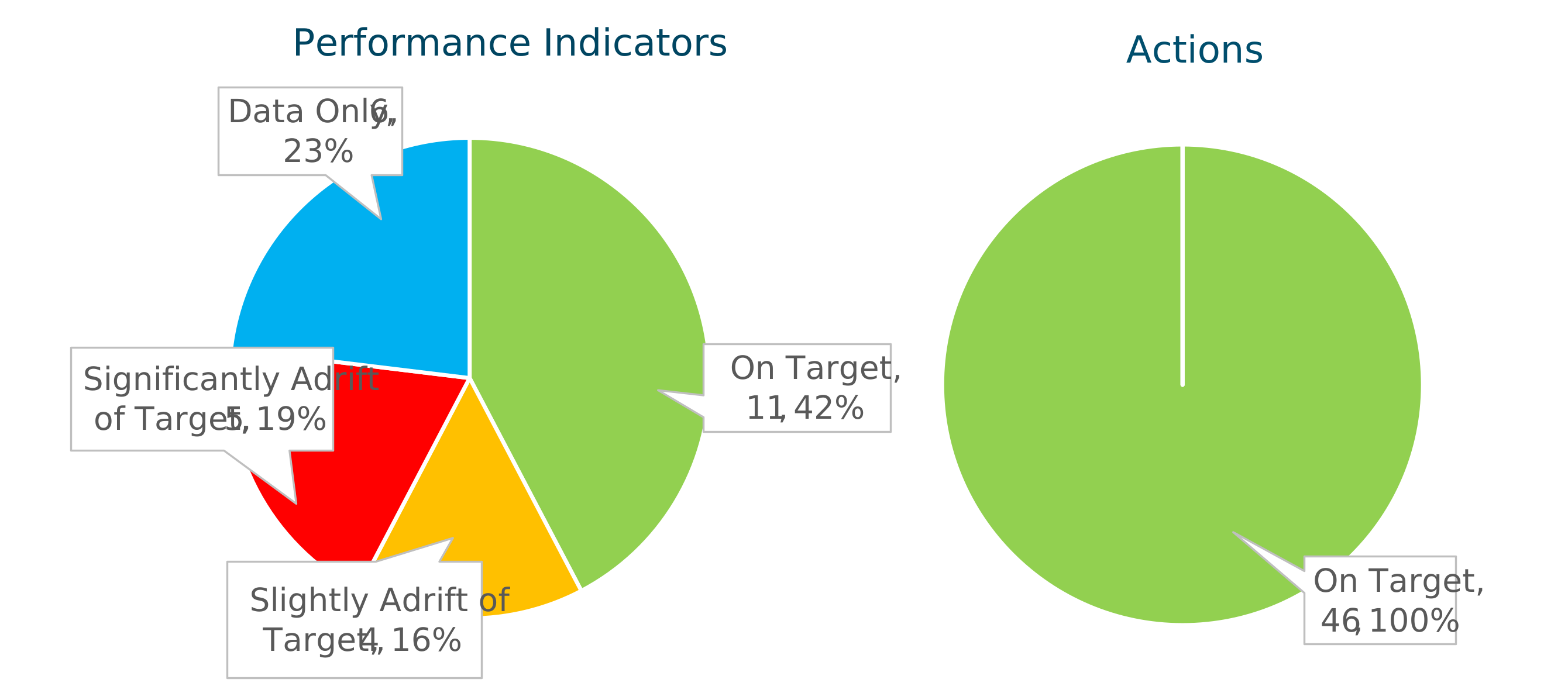
Performance indicators adrift of target
This section details the performance indicators adrift of target and the action being taken to address performance. Due to expected data lags, the most recent data may relate to previous time periods but may only now be available to report. To avoid duplication, only data that has not previously been reported to our Cabinet through Council Plan progress reporting is included in this section. Further details can be found in the Performance Indicators section within this report.
Slightly adrift of target
The percentage of income due from council tax received by the end of the year was 94% for 2024 to 2025. This is below the target of 98% resulting in the amber status for this indicator. Performance represents a slight improvement from the previous year and is relatively consistent since 2022 to 2023. Collection activity in relation to Council Tax debt continues, with the achievement of budgeted recovery levels forecast over the medium term. We continue to support residents throughout the year through repayment plans and where required through directing residents to other money advice supports available. It is also recognised that the ongoing encouragement for residents to use the direct debit payment method should help improve collection levels in future.
Significantly adrift of target
The household waste recycling figure for Quarter 2 Calendar Year (April to June 2025) is estimated at 51.2%, which is still subject to verification by SEPA, this is lower than the Quarterly target of 56%. Actions have been taken to improve the separation of Waste Upholstered Domestic Seating (WUDS) from within our bulky waste collection service to help minimise the impact of the change in legislation. Contamination levels within the purple bin for glass, cans and plastics have contributed to a decline in performance and actions to promote the council’s ‘Right Stuff Right Bin’ campaign are ongoing to try and reduce this. An increase in the type of wood being deposited at recycling centres that is only suitable for biomass recovery and not for recycling, is also impacting performance. Actions are being taken to explore the level of source segregation at each recycling centre to identify if there is further scope for improvement. The reduction in performance related to separating WUDS from bulky uplifts will start to improve in Q4 2025 Calendar Year (October to December 2025), following the change to the bulky waste service, with further recovery anticipated in the 2026 calendar year which will contribute to meeting the target.
The Improvement Service published the household waste recycling figures for the 2024 calendar year in October 2025 via the Local Government Benchmarking Framework. The council continues to be a high performer, with a recycling rate of 53% for the 2024 calendar year, achieving 9th out of the 32 Scottish councils, with only 0.3% separating our council and the 5th place council. We manage the largest waste tonnage of the strongest performing nine councils, managing over 8,200 tonnes more waste per year.
The average recycling rate in Scotland for 2024 was 44.3% and we are 8.7 percentage points above the national average at 53%.
Indicator amendments and recommendations
Following the publication of the October 2025 data release from the Improvement Service, the 2024 to 2025 figure has been confirmed as 8%. This replaces the previously reported provisional figure of 8.03%.
The 2023 to 2024 figure has been amended from 5.9% to 7.5% after a data correction in the Annual Return on the Charter 2023 to 2024 submitted to Cabinet for approval on 23 September 2025. The amendment was made as some periods had been incorrectly classified as long-term vacancies affecting the rent owed and increasing the rent loss. Updated guidance has been issued and a new process is now in place for recording excluded periods supported by monthly quality assurance checks. The Improvement Service has been informed of this amendment however, this will not be reflected through the LGBF dashboard until the 28 November 2025 Data Release.
Following the publication of the October 2025 data release from the Improvement Service, the 2024 to 2025 figure has been confirmed as 94% as per the previously reported provisional data.
Actions adrift of target
No actions are currently adrift of target.
Performance indicators
| Icon | Label |
|---|---|
 | On Target |
 | Data Not Available |
 | Data Only |
 | Slightly Adrift of Target |
 | Significantly Adrift of Target |
| PI code and description | 2022-2023 Value | 2022-2023 Target | 2022-2023 Status | 2023-2024 Value | 2023-2024 Target | 2023-2024 Status | 2024-2025 Value | 2024-2025 Target | 2024-2025 Status | 2025-2026 Q2 Value | 2025-2026 Q2 Target | 2025-2026 Q2 Status | 2025-2026 Target |
|---|---|---|---|---|---|---|---|---|---|---|---|---|---|
| CP_36 Number of residents participating in community learning and development activity including youth work | 17,804 | | | 23,503 | 18,700 | | 28,102 | 19,500 | | 7,933 | 7,000 | | 23,500 |
| CP_04 Proportion of children meeting developmental milestones (LGBF) | 79.5% | | | 77.50% | 79% | | Data Available May 2026 | 79% | | Not measured for quarters | 79% | ||
| CP_37 Average total tariff score of pupils living in SIMD 20% most deprived areas | 670.2 | | | 664.3 | 714 | | Data Available March 2026 | 720 | | Not measured for quarters | 720 | ||
| CP_06 Average tariff score: All Leavers | 847.2 | | | 840.8 | 908 | | Data Available February 2026 | 910 | | Not measured for quarters | 910 | ||
| CP_38 Average total tariff for care experienced Young People | 411.5 | | | 355 | 465 | | Data Available March 2026 | 470 | | Not measured for quarters | 470 | ||
| CP_07 % of school leavers entering positive destinations (LGBF) | 96.5% | | | 95.6% | 96.4% | | Data Available February 2026 | 96.8% | | Not measured for quarters | 96.8% | ||
| CP_39b Number of unemployed people that have progressed to employment as a result of participation in council funded or operated employability activities | 427 | | | 475 | | | Data Available November 2025 | 475 | | Not measured for quarters | 450 | ||
| CP_10a % of procurement spend on local enterprises | 26.04% | 25% | | 24.48% | 26% | | 26.8% | 27% | | Not measured for quarters | 27% | ||
| CP_40 Number of new build housing units reaching completion (all tenures) (actual not cumulative) | 562 | | | 384 | 295 | | 371 | 396 | | 78 | | | 436 |
| CP_41 Number of empty homes brought back into use (actual) | 120 | | | 378 | 200 | | 375 | 300 | | 78 | 78 | | 350 |
| CP_28 Hectares of vacant and derelict land in North Ayrshire | 1,130 | 1,094 | | 951 | 1,094 | | 942 | 925 | | Not measured for quarters | 925 | ||
| CP_27 Street Cleanliness Index - % Clean (LGBF) | 84.6% | 90 | | 89.1% | 87 | | 90.3% | 87 | | Data Available following next audit | 89% | | 89 |
| CP_20 Overall percentage of road network that should be considered for maintenance treatment | 34.8% | 33.8% | | 32.5% | 34.8% | | 30.6% | 32.5% | | Not measured for quarters | 32% | ||
| CP_42 Provided floor space of commercial/industrial space within our council portfolio (sq. ft) | 400,991 | | | 404,897 | 404,755 | | 423,077 | 423,077 | | Not measured for quarters | 423,077 | ||
| CP_02 % of council budget directed via participatory methods | 2.74% | 1% | | 2.05% | 1.5% | | 1.97% | 1.5% | | 1.18% | | | 1.5% |
| CP_43 Number of council assets under community management (cumulative) | 49 | | | 53 | 54 | | 55 | 56 | | 56 | | | 57 |
| CP_30 Total installed capacity of low carbon heat and electricity generation across the council's estate | 12,104 | 11,800 | | 15,992 | 12,000 | | 17,630 | 28,499 | | Not measured for quarters | 30,137 | ||
| CP_29 Overall carbon emissions (tonnes) (Non-domestic council estate) [1] | 20,896 | 21,000 | | 20,745 | 19,500 | | 20,333 | 19,953 | | 3,313 | | | 19,824 |
| CP_44a % of council dwellings that are energy efficient (Formerly known as SHSN05a) (LGBF) [2] | 98.2% | | | 98.01% | 98.1% | | 97.66% | 98.5% | | Not measured for quarters | 98.7% | ||
| CP_45 Length of new or improved active travel routes per annum (Metres) | 1,090 | | | 3,900 | 2,000 | | 2,500 | 2,000 | | Not measured for quarters | 2,000 | ||
| CP_46 Number of trees planted under the North Ayrshire 2030 Tree Planting Strategy | No data | No data | No data | 36,531 | 40,000 | | 49,026 | 47,000 | | Not measured for quarters | 60,000 | ||
| CP_19 Proportion of operational buildings that are suitable for their current use (LGBF) | 95.1% | 93% | | 95.2% | 92.1% | | 95.4% | 93% | | Not measured for quarters | 93% | ||
| CP_31 % of total household waste that is recycled (calendar year as per SEPA) (LGBF) [3] | 55.3% | 56.9% | | 56.1% | 57% | | 53% | 56% | | 51.2% | 56% | | 53% |
| CP_25 % of council dwellings that meet the Scottish Housing Quality Standard (LGBF) | 63.2% | | | 76.9% | 72.5% | | 94% | 97.4% | | Not measured for quarters | 97.57% | ||
| CP_47 Gross rent arrears (all tenants) as at 31 March each year as a percentage of rent due for the reporting year (LGBF) | 7.1% | | | 7.5% | 6.5% | | 8% | | | Not measured for quarters | 7.0% | ||
| CP_48 % of income due from council tax received by the end of the year (LGBF) | 94.7% | | | 93.6% | 94% | | 94% | 98% | | Not measured for quarters | 94% | ||
- CP_29 - The 2025-2026 Q2 Value is provisional (actual, not cumulative) and will be confirmed as more data becomes available.
- CP_44a - This indicator has been updated with local data only since 2022-2023 due to the pause in LGBF reporting on this indicator as EESSH2 is established.
- CP_31 - The 2025-26 Q2 Value is provisional as subject to verification by SEPA. The value covers the period April – June 2025 as this indicator’s reporting period falls in line with the calendar year.
Action tracker
| Icon | Label |
|---|---|
| On Target |
| Slightly Adrift of Target |
| Significantly Adrift of Target |
| Ref # | Existing Overall Action (and Priority) | Q2 2023-2024 | Q3 2023-2024 | Q4 2023-2024 | Q1 2024-2025 | Q2 2024-2025 | Q3 2024-2025 | Q4 2024-2025 | Q1 2025-2026 | Q2 2025-2026 |
|---|---|---|---|---|---|---|---|---|---|---|
| CP01 | Ensuring that wellbeing is at the heart of local life and opportunities, with a focus on tackling inequalities (Wellbeing Priority). | | | | | | | | | |
| CP02 | Developing a Community Wealth Building approach to a wellbeing economy (Wellbeing Priority). | | | | | | | | | |
| CP03 | Improving educational attainment and achievement and closing the attainment gap (Wellbeing Priority). | | | | | | | | | |
| CP04 | Improving outcomes for care experienced young people including implementation of The Promise (Wellbeing Priority). | | | | | | | | | |
| CP05 | Developing the Young Workforce and ensuring positive destinations for school leavers (Wellbeing Priority). | | | | | | | | | |
| CP06 | Providing lifelong learning opportunities for individuals and organisations, including digital literacy (Wellbeing Priority). | | | | | | | | | |
| CP07 | Maximising access to and uptake of benefits, entitlements and financial advice (Wellbeing Priority). | | | | | | | | | |
| CP08 | Ensuring that supports are available in communities to alleviate cost-of-living pressures through community hubs and networks (Wellbeing Priority). | | | | | | | | | |
| CP09 | Through our housebuilding programme and wider Housing Investment provide homes for life that meet the needs of our residents (Wellbeing Priority). | | | | | | | | | |
| CP10 | Increase the number of homes in the area through a mix of private and social developments and bringing empty buildings back in to use (Wellbeing Priority). | | | | | | | | | |
| CP11 | Exploration of models and the development of pilot schemes to increase access to and use of public/community transport (Wellbeing Priority). | | | | | | | | | |
| CP12 | Ensure our places and spaces where we live, work and visit are well maintained and accessible (Wellbeing Priority). | | | | | | | | | |
| CP13 | Developing infrastructure to support business growth (Wellbeing Priority). | | | | | | | | | |
| CP14 | Support KA Leisure’s leadership of North Ayrshire’s Health and Wellbeing Alliance (Wellbeing Priority). | | | | | | | | | |
| CP15 | Through the Health and Social Care Partnership Strategic Plan we will protect and provide care and support for those in need (Wellbeing Priority). | None | None | None | None | None | None | None | None | None |
| CP16 | Developing strong relationships with communities and partners based on trust and shared aspirations using their experiences to inform service provision (Communities and Local Democracy Priority). | | | | | | | | | |
| CP17 | Providing support for community organisations in achieving their goals, including as Community Wealth Building anchor organisations (Communities and Local Democracy Priority). | | | | | | | | | |
| CP18 | Creating a participation and engagement framework which ensures opportunities and support for all residents to take part in influencing local democracy and council and partner strategies (Communities and Local Democracy Priority). | | | | | | | | | |
| CP19 | Supporting participatory budgeting (Communities and Local Democracy Priority). | | | | | | | | | |
| CP20 | Supporting community asset transfer and community owned and operated/managed assets (Communities and Local Democracy Priority). | | | | | | | | | |
| CP21 | Supporting the Community Planning Partnership and the Community Plan (LOIP) (Communities and Local Democracy Priority). | | | | | | | | | |
| CP22 | Developing partnerships with the third and voluntary sector (Communities and Local Democracy Priority). | | | | | | | | | |
| CP23 | Placemaking, including creation of locality action plans based on the Community Plan (LOIP) priorities and support the delivery of Islands Plans (Communities and Local Democracy Priority). | | | | | | | | | |
| CP24 | Ensuring an inclusive, fair, rights-based and asset-based approach in our work (Communities and Local Democracy Priority). | | | | | | | | | |
| CP25 | Accessible public services, both digitally and locally, ensuring a ‘No Wrong Door’ approach (Communities and Local Democracy Priority). | | | | | | | | | |
| CP26 | Embedding our net-zero ambition in all democratic decision-making (Climate Change Priority). | | | | | | | | | |
| CP27 | Reducing the carbon footprint of our estate through rationalisation utilising a locality-based approach and taking a fabric first and low carbon energy generation approach to homes and buildings (Climate Change Priority). | | | | | | | | | |
| CP28 | Improving resilience and reducing carbon by developing and supporting supply chains where materials and goods are sourced locally (Climate Change Priority). | | | | | | | | | |
| CP29 | Promoting new woodland creation and protecting our green spaces to provide a natural resource for carbon sequestration (Climate Change Priority). | | | | | | | | | |
| CP30 | Supporting local businesses as they meet their climate change obligations (Climate Change Priority). | | | | | | | | | |
| CP31 | Promoting a circular economy in North Ayrshire to reduce consumption of raw materials and promote reuse, repair and recycling, and generating energy from residual waste (Climate Change Priority). | | | | | | | | | |
| CP32 | Developing local low carbon energy generation schemes and networks (Climate Change Priority). | | | | | | | | | |
| CP33 | Unlocking the potential of community owned energy generation to bring new income streams into communities and help them take direct action to combat climate change (Climate Change Priority). | | | | | | | | | |
| CP34 | Learning for sustainability, and work with communities to adopt low carbon behaviour change and encourage climate-based volunteering activities (Climate Change Priority). | | | | | | | | | |
| CP35 | Improving communities’ preparedness to deal with the impacts of climate change already locked-in (Climate Change Priority). | | | | | | | | | |
| CP36 | Working with communities to adopt low carbon behaviour change and encourage climate-based volunteering activities (Climate Change Priority). | | | | | | | | | |
| CP37 | Taking a nature-based approach to protect our habitats and species (Climate Change Priority). | | | | | | | | | |
| CP38 | Developing and promoting active travel infrastructure (Climate Change Priority). | | | | | | | | | |
| CP39 | Transitioning to low and zero carbon travel (Climate Change Priority). | | | | | | | | | |
| CP40 | Ensuring robust governance arrangements are in place to fulfil the council’s statutory duties, manage risk and support delivery of key priorities (A Sustainable Council Priority). | | | | | | | | | |
| CP41 | Using dynamic data and lived experiences to inform decision-making (A Sustainable Council Priority). | | | | | | | | | |
| CP42 | Working with partners nationally, regionally and locally to secure investment and target resources towards our priorities (A Sustainable Council Priority). | | | | | | | | | |
| CP43 | Driving change and transformation, using technology where appropriate, to deliver efficient and effective services and support delivery of priorities (A Sustainable Council Priority). | | | | | | | | | |
| CP44 | Maximising financial flexibilities to help support delivery of priorities (A Sustainable Council Priority). | | | | | | | | | |
| CP45 | Maximising value from the use of our assets (A Sustainable Council Priority). | | | | | | | | | |
| CP46 | Focusing our investment on priorities (A Sustainable Council Priority). | | | | | | | | | |
| CP47 | Effective workforce planning ensuring that we have the right skills/resources to deliver priorities (A Sustainable Council Priority). | | | | | | | | | |
Contact us
We strive to make our reporting as accessible as possible. If you have any questions or require further information on our council’s performance please contact:
The Corporate Policy and Performance Team
Telephone: 01294 310000
Email: NorthAyrshirePerforms@north-ayrshire.gov.uk
Reports can be viewed on our council performance webpage.