Accessibility tools
Powered by  Translate
Use the boxes below to change the website colours.
Visit disclaimer page for more information about the accessibility tool.
Children share their joy of learning languages
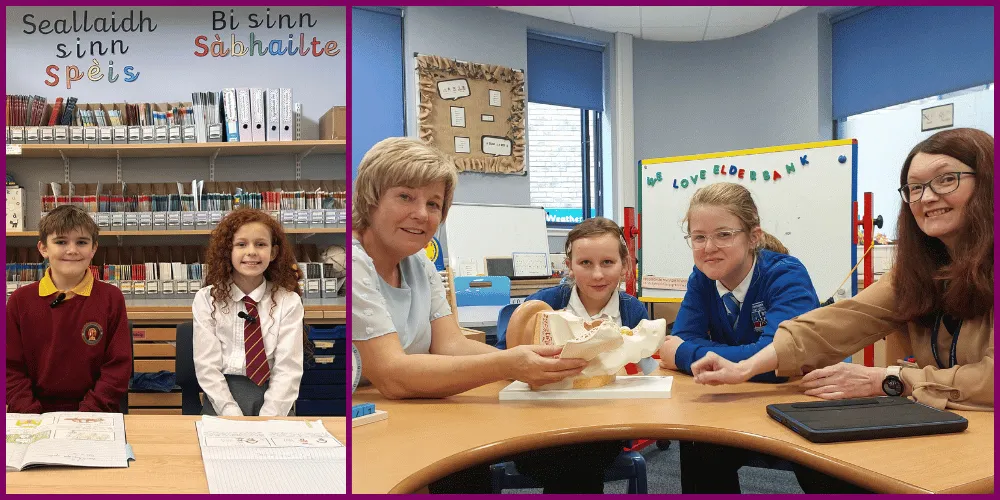
Pupils at schools across North Ayrshire have spoken up about how they are enriching their learning by developing their skills in Spanish, Gaelic and British Sign Language.
Languages are being taught in primary and secondary schools across the area, with young people also having the opportunity to master French and German.
As well as learning how to communicate in a second language, pupils are discovering how to connect with other people and build relationships.
Languages are also great for boosting young people’s confidence, and teaching them about different cultures and the importance of diversity.
Quote: Learning a new language is a fantastic skill and can open a lot of doors for young people in our schools, not only now but when they are older. It can enhance employability opportunities and travel is easier now than it has ever been, so many of our pupils might want to travel or work abroad in future. We also have an increasingly diverse population here in Scotland, so learning additional languages is a huge benefit when it comes to communication.
Quote from: Councillor Jean McClung, Cabinet Member for Education and Young People
Pupils at Ardrossan Academy, Elderbank Primary School in Irvine and Whitehirst Primary School in Kilwinning have shared their experiences of embracing different languages.
The Council is committed to the promotion and support of Gaelic Medium Education and Whitehirst Park is the base for North Ayrshire’s Gaelic provision.
Currently, pupils from P1 through to P7 are studying the language, meaning they have the advantage of being proficient in both Gaelic and English. During the first three years of primary, pupils have total immersion in Gaelic, meaning the curriculum is taught entirely in Gaelic.
Pupils Helen and Struan, both in P7, are proud to be bilingual and can speak confidently about a variety of subjects, including their favourite foods – pizza for Helen and macaroni cheese for Struan.
Elderbank Primary is home to Elderbank Enhanced Deaf Provision alongside its mainstream classes and early years centre. This ensures that deaf and hearing-impaired pupils can learn – with support – in a primary school environment.
P7 pupils Lois and Sophie are developing their BSL skills at the school. Sophie explained, using signing, that her three favourite foods are Chinese, Japanese and Indian while art-lover Sophie added: “It is very important for people to learn to sign… to feel included.”
At Ardrossan Academy, pupils – including children involved in the Secondary Support Resource base, where pupils have access to additional support for a variety of reasons - are learning modern languages.
S1 pupil Brody is developing his conversational Spanish and says – in Spanish – that he likes “chocolate and football”.
The work being done to teach languages in schools reflects the principles of the United Nations Convention on the Rights of the Child (UNCRC), which recognises educational goals.
Article 29 of the UNCRC focuses on how education must develop every child’s personality, talents and abilities to the full. It must encourage the child’s respect for human rights, as well as respect for their parents, their own and other cultures and the environment
Ensuring children have opportunities to learn various languages in school is one of the many ways the Council supports these rights.
Published: 11 November 2026